Clinical Case Scenario
A 23-year-old non-alcoholic man weighing 55 kgs with osteogenic sarcoma of the right femur; post- chemotherapy (2 weeks back), presented with febrile neutropenia and profuse watery diarrhoea (8–10 episodes/day) for the past 3 days. He developed oral mucositis with slightly decreased intake for 1 week. He was on long term analgesics ( paracetamol & morphine) for past 6 months for severe tumour-site pain.
He was managed in the oncology ward with broad-spectrum IV antibiotics, IV fluids, and electrolyte replacement. His fever resolved. However, during his hospital stay, he developed progressively worsening shortness of breath. Persistent tachypnoea prompted ICU transfer.
In the ICU he was alert, oriented, haemodynamically stable, with normal SpO2 and marked tachypnoea.
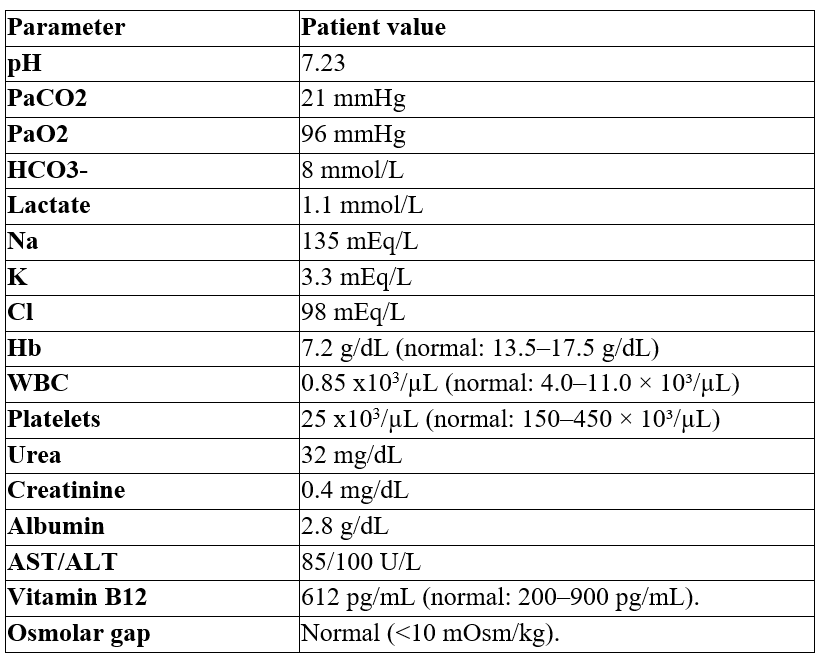
CT Pulmonary Angiography- no pulmonary embolism; Lung fields- no infiltrates or consolidation. 2D Echocardiogram- normal.
Peripheral smear showed normocytic normochromic anaemia with leukopenia and thrombocytopenia - pancytopenia without schistocytes, blasts, or immature cells.
Iron studies and vitamin B12 were normal.
Urine ketones were negative.
There was no toxin ingestion history, and the osmolar gap was normal. Corrected AG- 32 mEq/L
The tachypnoea was attributed to the High Anion gap metabolic acidosis.
Medication history
Past medications: Oral Paracetamol 1 g QID for 6 months; Morphine 10 mg BD, Ondansetron TDS and Magnesium oxide OD for 3 weeks.
Current medications: Intravenous- Meropenem, Doxycycline, Paracetamol, Pantoprazole and Inj Filgrastim
Question: A serum toxic alcohol screen and urine organic acid analysis were sent. Which among these will be most likely increased in this patient?