Clinical Case Scenario
A 63-year-old woman with diabetes mellitus, hypertension, coronary artery disease (status post PCI), and end-stage kidney disease on twice-weekly maintenance hemodialysis presented with sudden-onset breathlessness after missing one dialysis session. On examination, she was in hypertensive pulmonary edema with BP 230/110 mmHg, HR 135/min, RR 35/min, and SpO₂ 100% on a non-rebreather mask (15 L/min).
Investigations showed:
- Hb -9 g/dL
- WBC -10,800 /uL
- Urea -123 mg/dL
- Cr -6.2 mg/dL
- Na -132 mEq/L
- K -5.5 mEq/L
- Ca -7.8 mg/dL
- Cl -98 mEq/L
- HCO3 -15 mEq/L
- HSTrop I: 23 ng/L
- NtProBNP: 18,330 pg/mL
- ECHO: EF of 45%, RWMA, preserved RV function,
and a dilated non-collapsible IVC. (Old findings)
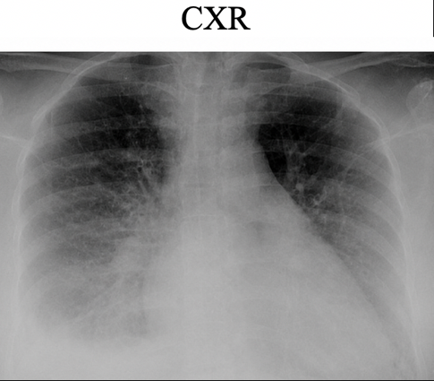
Dialysis initiation was delayed because the dialysis machine and water distribution loop were undergoing the scheduled disinfection cycle. She was started on non-invasive ventilation (NIV), intravenous nitroglycerin (NTG) infusion, and diuretics while awaiting urgent hemodialysis. Subsequently, the patient underwent hemodialysis (Qb 250 mL/min, Qd 500 mL/min, UF target 2 L, Dialysate K+: 1 mEq/L, Dialysate bicarbonate: 35 mEq/L & Dialysate Na: 135 mEq/L). After 2.5 hours of dialysis and removal of 1.5 L ultrafiltrate, pulmonary edema improved and NIV was discontinued.
Shortly thereafter, she again desaturated. NIV was restarted (FiO₂ 100%), but SpO₂ remained at 84%.
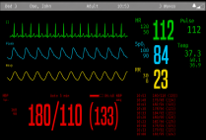
Despite severe desaturation, the patient remained comfortable. Point-of-care lung ultrasound demonstrated an A-profile bilaterally with only minimal pleural effusion.
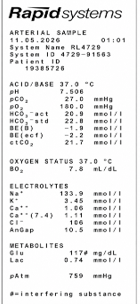
Arterial blood gas showed PaO₂ 180 mmHg despite SpO₂ 84%.
What is the next best step?