

We continue to rely heavily on delayed biomarkers such as serum creatinine and urine output, while clinical decisions often depend on physicians’ experience rather than on continuous interpretation of the vast amount of physiologic data generated at the bedside. The trouble is one of timing: by the time serum creatinine rises, substantial and sometimes irreversible kidney injury may already have occurred. In a data-rich ICU, care that waits for a lagging number to move is care that is always one step behind the patient.
Prediction is valuable only if it leads to action. An AI-generated risk score should never become just another number in the electronic health record. Instead, it should activate evidence-based interventions before irreversible injury develops, i.e., optimizing hemodynamics, avoiding nephrotoxins, adjusting medications, and increasing monitoring intensity. Modern machine-learning algorithms can continuously analyze hundreds of variables to estimate a patient’s future AKI risk hours before conventional criteria are met. Used this way, the flag on our patient’s chart is not an alarm to be silenced; it is a window of opportunity to prevent the injury that the creatinine has not yet revealed. The transition from detecting AKI to preventing AKI is one of the greatest opportunities for AI in nephrology.
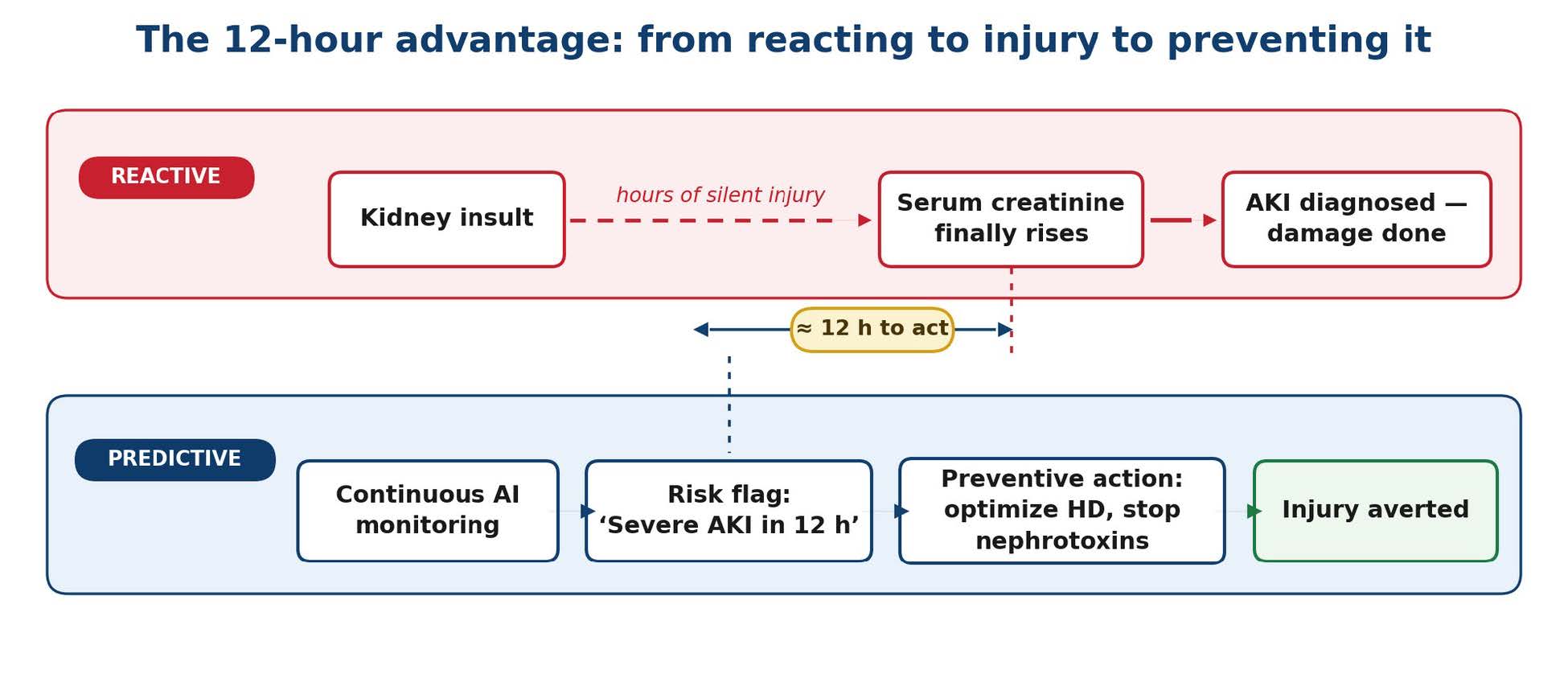
Figure 1. Acting on an AI risk flag roughly 12 hours before serum creatinine moves turns detection into prevention.
Hybrid intelligence describes a partnership in which clinicians and AI challenge and strengthen each other’s reasoning. AI will augment rather than replace physicians because the two have complementary strengths. Humans excel at contextual reasoning, ethical decision-making, empathy, and understanding patient values. AI excels at continuously processing enormous volumes of multidimensional data without fatigue or cognitive overload, and at recognizing subtle non-linear relationships across hundreds of variables that no clinician could track simultaneously. Clinicians naturally simplify complex information using heuristics, which are essential for efficient decision-making but can be a source of cognitive bias. The best decisions will increasingly emerge where human judgment and machine pattern recognition meet. In nephrology, the future is not human versus AI; it is human plus AI.
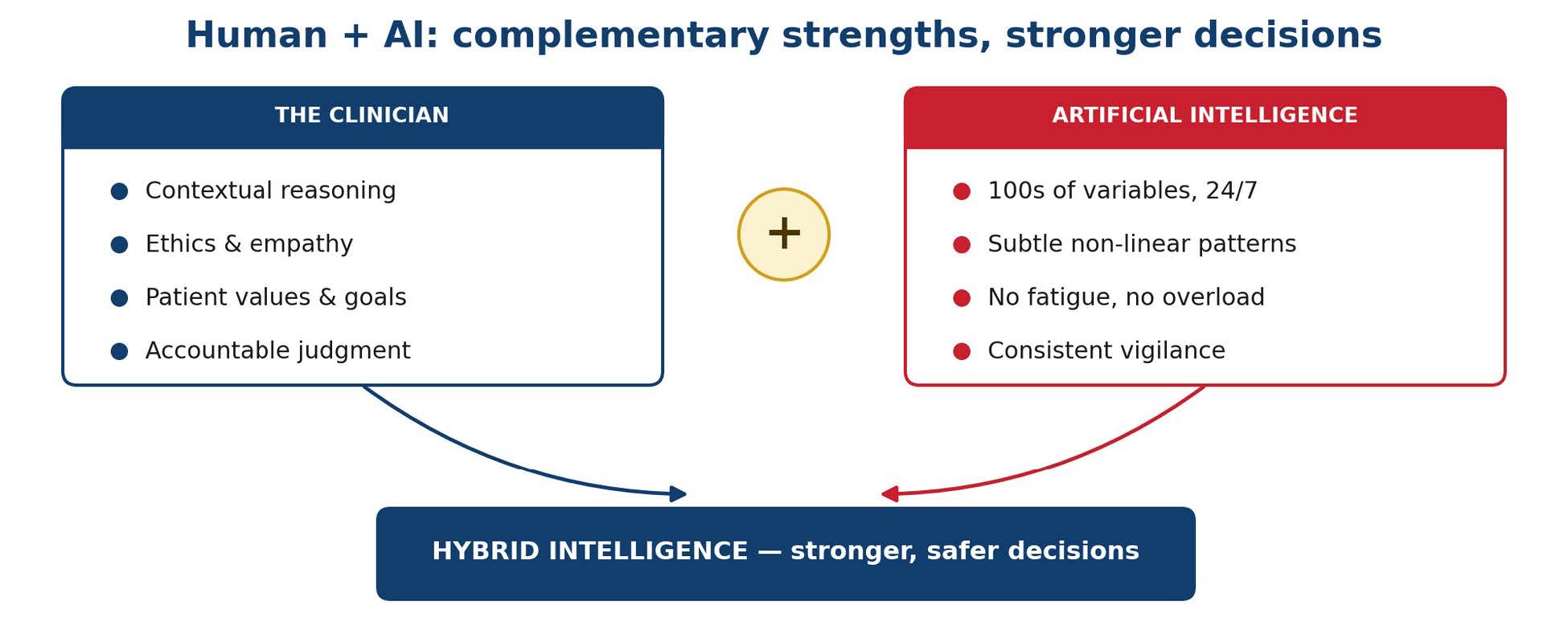
Figure 2. Hybrid intelligence — clinician judgment and AI pattern recognition reinforce, rather than replace, one another.
The same number can mean very different things. AKI is not a single disease but a syndrome with multiple phenotypes, diverse mechanisms, and constantly evolving trajectories — and treating both patients identically ignores that reality. Rather than assigning every patient the same pathway, AI enables precision nephrology by integrating multimodal information from the electronic health record, continuous physiologic monitoring, laboratory trends, imaging, and medication exposure. It can identify which patients are likely to benefit from specific interventions, predict renal recovery, estimate dialysis needs, and personalize fluid management. For Patient A, that may mean prioritizing perfusion and source control; for Patient B, careful decongestion rather than further fluid. The goal shifts from standardized care to individualized care.
A standard predictive model answers the question “what is likely to happen?” A digital twin goes further. It is a dynamic computational model of an individual patient that continuously updates using real-time clinical data, and, crucially, it can simulate how that patient’s physiology may respond to different treatment strategies before any intervention is delivered. This is a shift from prediction to simulation, in other words, from forecasting a trajectory to rehearsing the alternatives. It is the difference between a weather forecast and a flight simulator for the patient in front of you.
Instead of choosing among these options from experience alone, the team could ask the patient’s digital twin to simulate each one. The twin might estimate how a further fluid bolus, escalated vasopressors, or early CRRT would each influence kidney perfusion, fluid balance, electrolyte homeostasis, and the probability of renal recovery over the coming hours to days — before a single intervention is committed. In nephrology critical care, this same approach could help predict progression from mild to severe persistent AKI, optimize the timing and dose of renal replacement therapy, personalize ultrafiltration goals, prevent intradialytic hypotension, and forecast kidney recovery after critical illness. It is the intelligent bedside partner every intensivist and nephrologist has long wished for.
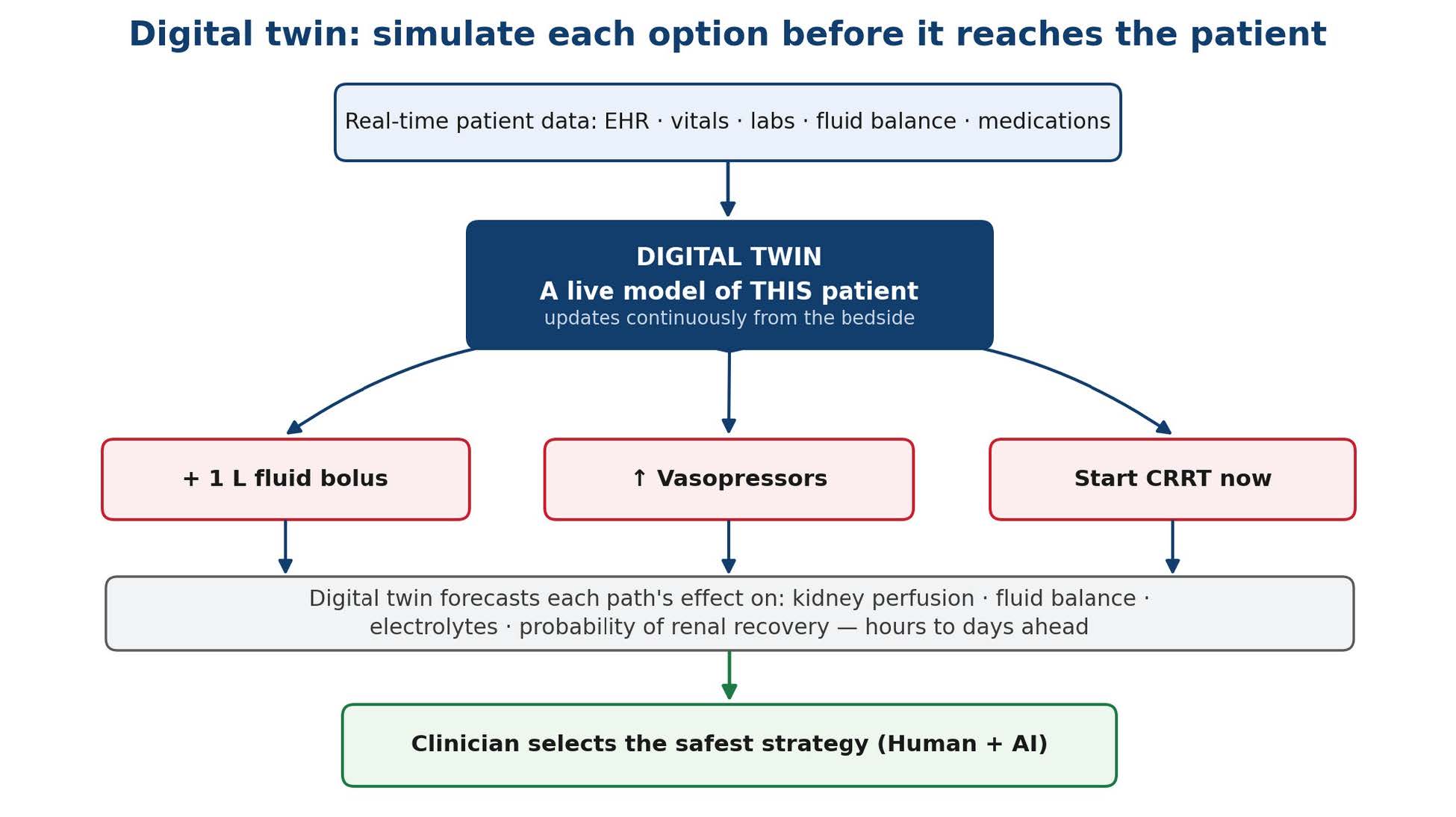
Figure 3. A digital twin simulates the fluid, vasopressor and CRRT strategies and forecasts their effects before any is delivered.
The next generation of AI moves past “what is likely to happen?” toward “what should we do next?” Reinforcement learning enables AI to learn optimal treatment strategies through repeated interactions with simulated patients, recommending personalized interventions, such as how to avert hypotension during dialysis or slow AKI progression, while continuously improving from accumulated experience. In parallel, generative AI and large language models are demonstrating real ability in clinical reasoning, education, documentation, and decision support. Used responsibly, these tools can reduce administrative burden while helping clinicians synthesize increasingly complex data into actionable insights.
Answer: I don’t actually have a personal MAP, norepinephrine dose, or lactate cutoff.I think that’s precisely where physiology gets oversimplified. A patient requiring norepinephrine is not automatically “too unstable” for decongestion, just as a patient with a VExUS Grade 3 is not automatically ready for aggressive fluid removal. The question I ask is ‘’ Is the circulation pressure-dependent, preload-dependent, or congestion-dependent at this moment?’’. Norepinephrine may be maintaining arterial pressure while decongestion relieves venous afterload. Those therapies are not inherently contradictory, actually, they can be complementary. The decision hinges on whether forward flow and tissue perfusion remain intact as congestion is relieved, not on crossing a predefined MAP, lactate, or vasopressor threshold.